
Description
Metody zarządzania wyświetlaczem opartym na HD44780 z Arduino
Zarządzanie wyświetlaczem z Arduino jest możliwe dzięki zastosowaniu biblioteki LiquidCrystal. Istnieje kilka sposobów sterowania:
- Tryb 4-bitowy bez kontroli flagi zajętości: 6 pinów GPIO (D4-D7 dla danych, RS i E dla sterowania, RW do masy).
- Tryb 4-bitowy z kontrolą flagi zajętości: 7 pinów GPIO (D4-D7 dla danych, RS, E i RW dla sterowania).
- Tryb 8-bitowy bez kontroli flagi zajętości: 10 pinów GPIO (DB0-DB7 dla danych, RS i E dla sterowania, RW do masy).
- Tryb 8-bitowy z kontrolą flagi zajętości: 11 pinów GPIO (DB0-DB7 dla danych, RS, E i RW dla sterowania).
Zalecany tryb: Tryb 4-bitowy bez kontroli flagi zajętości dla oszczędności pinów. Dla protokołu I2C, użyj wyświetlaczy z konwerterem I2C.
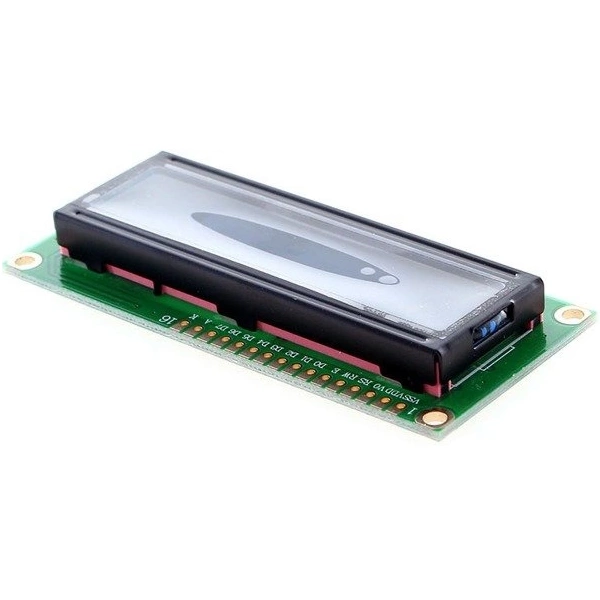
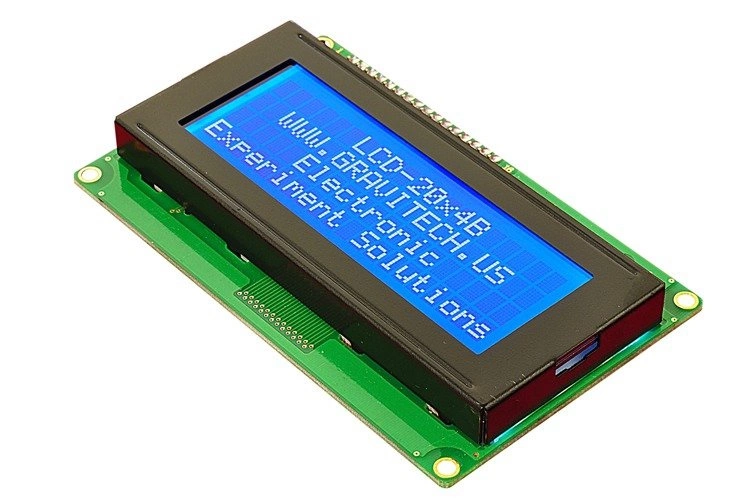
LCD display 2×16 QC1602A Blue on HD44780
Universal alphanumeric LCD 2×16 – 1602A, powered by 5 volts.
It is characterized by simple operation, high availability and numerous support for many microcontrollers.Thanks to the available libraries for Arduino and other microcontrollers, its operation is very simple.
This display is an essential information tool so that we can easily receive and present information. Thanks to its versatility, it is included in virtually every Arduino starter kit.
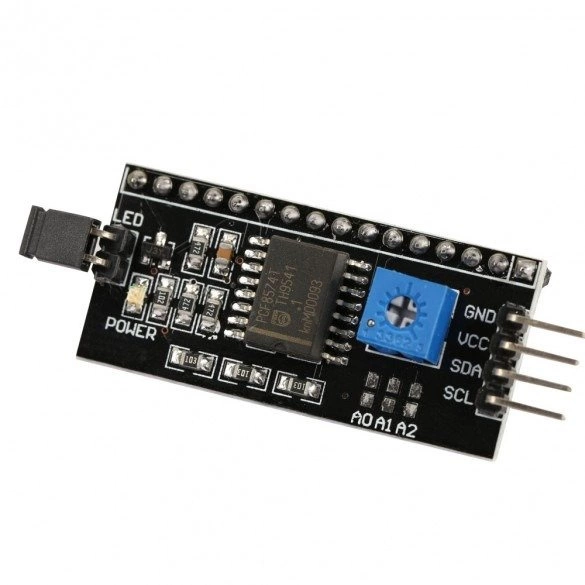
You can also use i2C converter, by which we limit the number of pins to two signal pins (SCL and SDA of the I2C bus) and two power pins + and -. Also for the display we recommend ptransparent casing made of acrylic, which provides an ideal base for projects keeping them neat and aesthetically pleasing.
LCD 1602A 2×16 parameters:
- Universal alphanumeric LCD display module 2×16 characters.
- 2×16 LCD display
- Blue backlighting
- White marks
- HD44780 compliant driver.
- Ability to define your characters
- In the standard set of libraries and sample programs downloaded from the Arduino environment is the LiquidCrystal library, which allows you to operate the display.
- Control – The display can be controlled in modes:
- 8-bit without reading the busy flag – eight data bus lines and two control lines (RS, E – RW connected to ground) are required for transmission.
- 8-bit with busy flag reading – eight data bus lines and three control lines (RS, E, RW) are required for transmission.
- 4-bit with read busy flag- four data bus lines and three control lines(RS, E, RW) are needed for transmission.
- 4-bit without reading the busy flag – transmission requires four data bus lines and two control lines (RS, E, RW connected to ground).
Technical specifications LCD 2×16
- Power supply: 5V
- Average current consumption: 10 mA
- Raster: 2.54mm
- Dimensions: 86x36x13.5
- Sign dimensions: 2.45 x 5.00 mm
- Operating temperature range: -20 to +70 °C
Pin Description for LCD Display Module 1602 z6x2
Understanding the function of each pin in the LCD display module is crucial to its proper operation and integration with other devices. Below you will find a detailed description.
- VSS Mass
- VDD Power +5V
- V0 Contrast
- RS Selection of display instruction register (low state) or data register(high state)
- R/W Read (low state) / Write (high state)
- E Unlocking the display
- DB0
- DB1
- DB2
- DB3
- DB4
- DB5
- DB6
- DB7
- LED A Backlight power supply +5V
- LED K Backlight weight
Key Features:
- Voltage Compatibility: The module’s power supply is +5V, making it easy to integrate with most circuits.
- Versatility: With a variety of pins, such as data bus and registers, the module offers a wide range of configuration options.
Reviews
There are no reviews yet.